El Rastro
Madird's world's greatest flea market and its borders

Every Sunday in Madrid is a special event, 9am–3pm. It’s not just a flea market or bazaar, but a real site of cultural exchange. El Rastro has been ongoing since the 15th century, when it was related to the tannery–slaughterhouse–butcher economy.
El Rastro refers to the trail—the trail of blood from carting recently slaughtered animal parts from one neighborhood to another. But also the entrails, as at various points in the 500-year history, the less desirable but still nutritious parts of the animals were made available to the less affluent. Madrid tries to take care of its people.
In more modern times, the market has come to sit on a hill defined by four metro stations: La Latina, Tirso de Molina, Puerta de Toledo, and Embajadores. This is at the bottom of Centro, south and a little to the west. We could walk from our place on Atocha about 20 minutes through Embajadores to get to the northeastern edge.
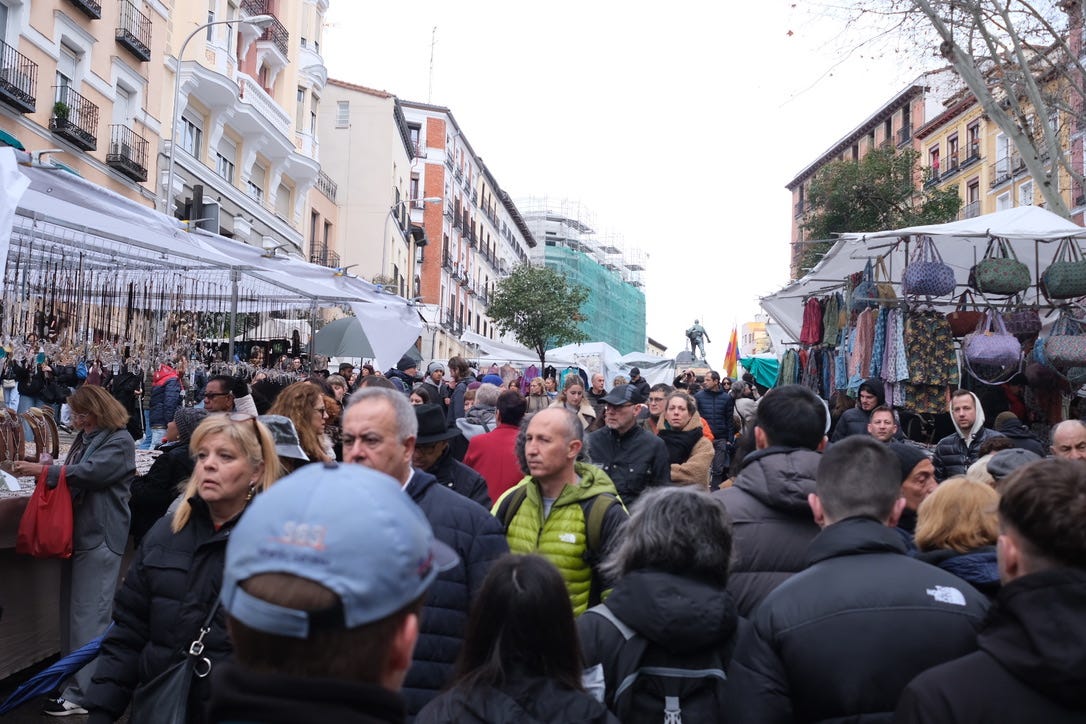
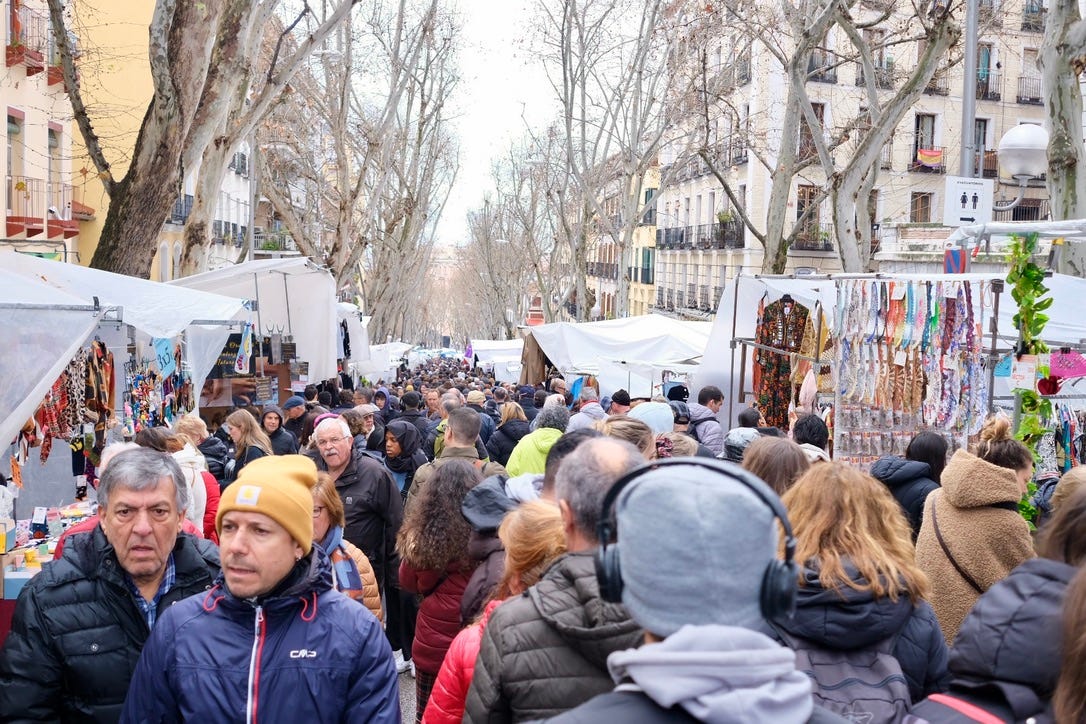
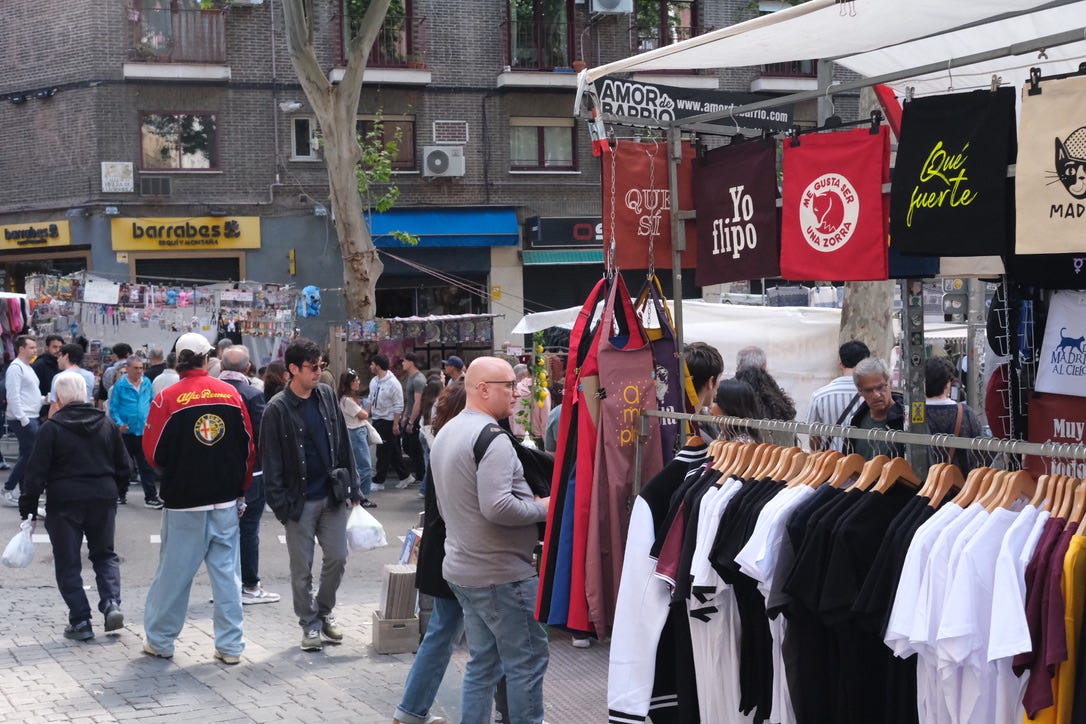
There is one main, steep street that forms the central artery, one big hill, Calle de la Ribera de Curtidores, Tanner’s Road. It becomes so packed with tourists and everyone else by 11am that it is practically impassable. But lively, very lively!
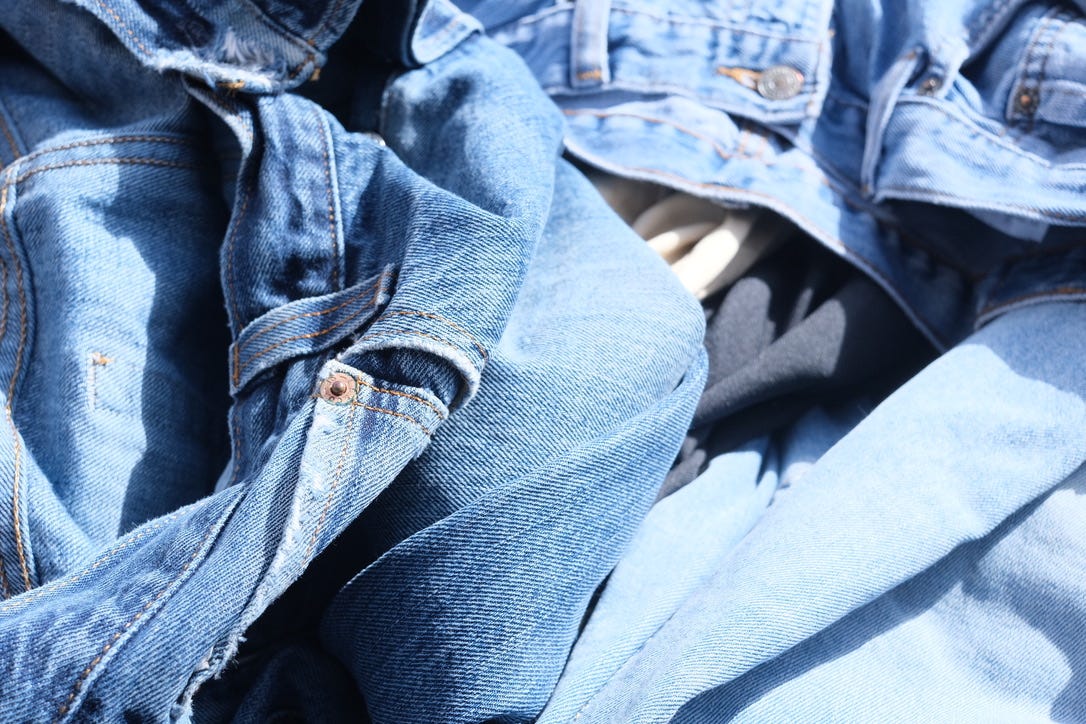
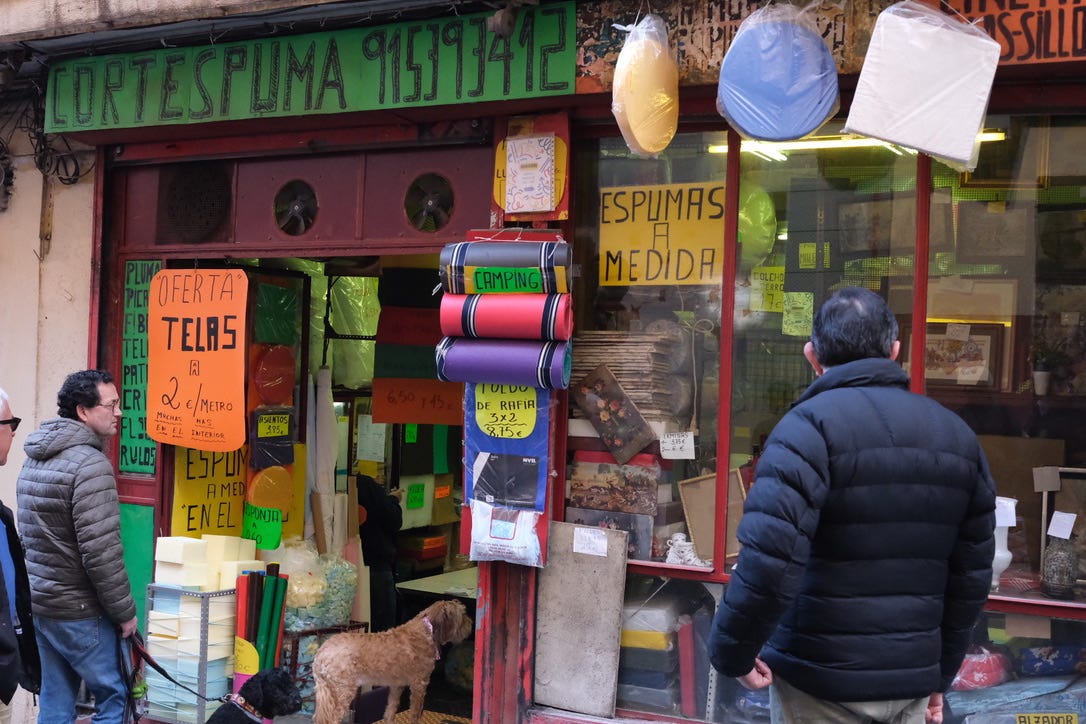
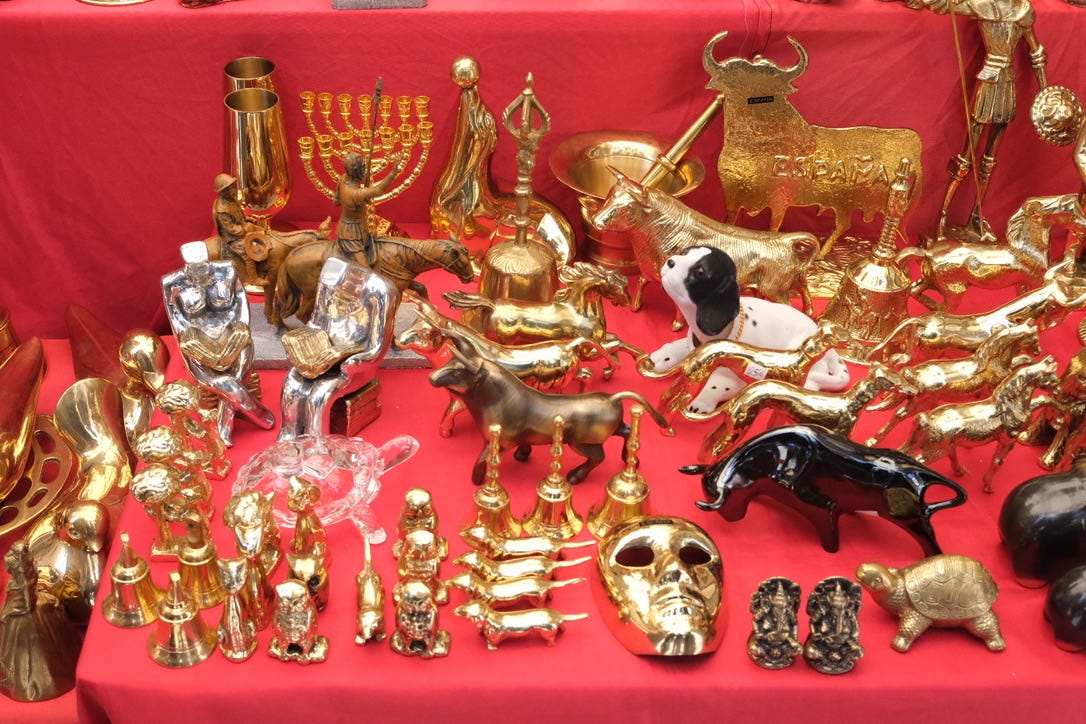
That main drag on the hill has more standard fare: touristic socks, oven mitts, mass-produced kitchen things, caps and hats, some used clothing like fútbol jerseys and overpriced vintage denim. It’s all outside, a limit of 3,500 stalls, except for some of the storefronts on the side streets, which make it a sidewalk sale and invite people inside.
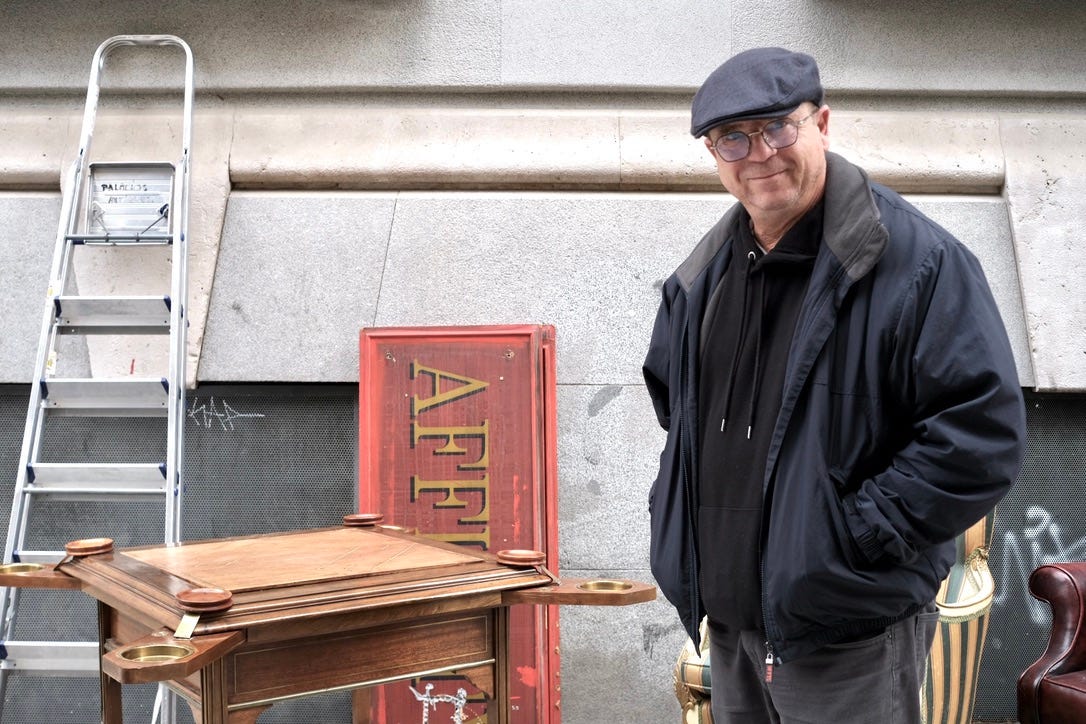
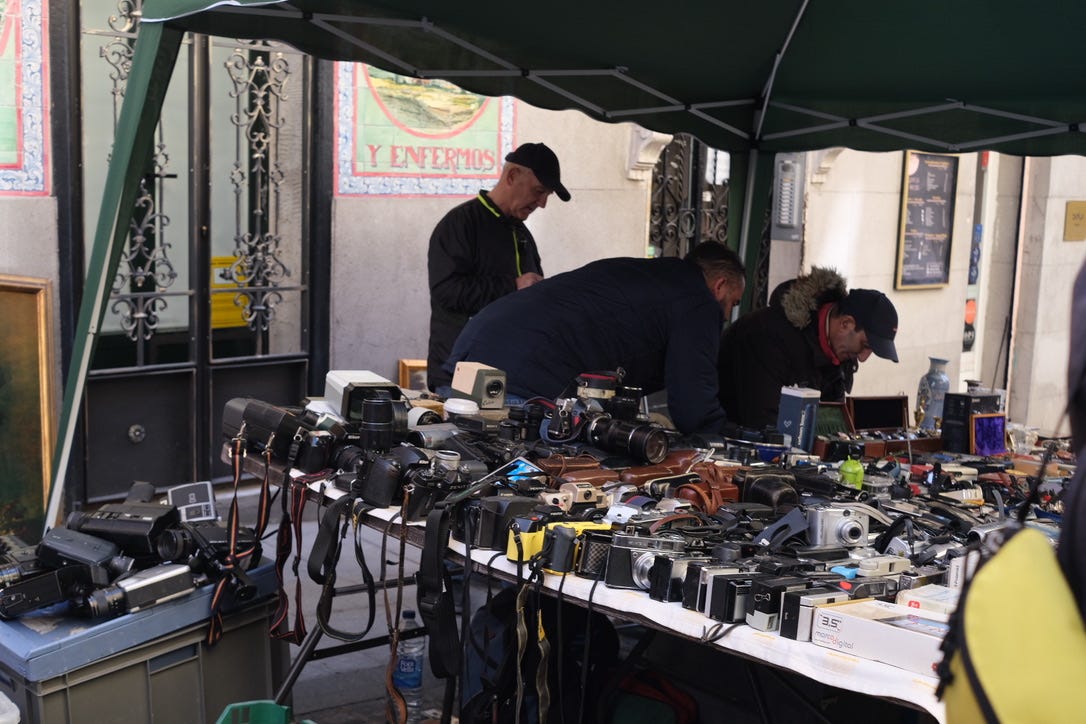
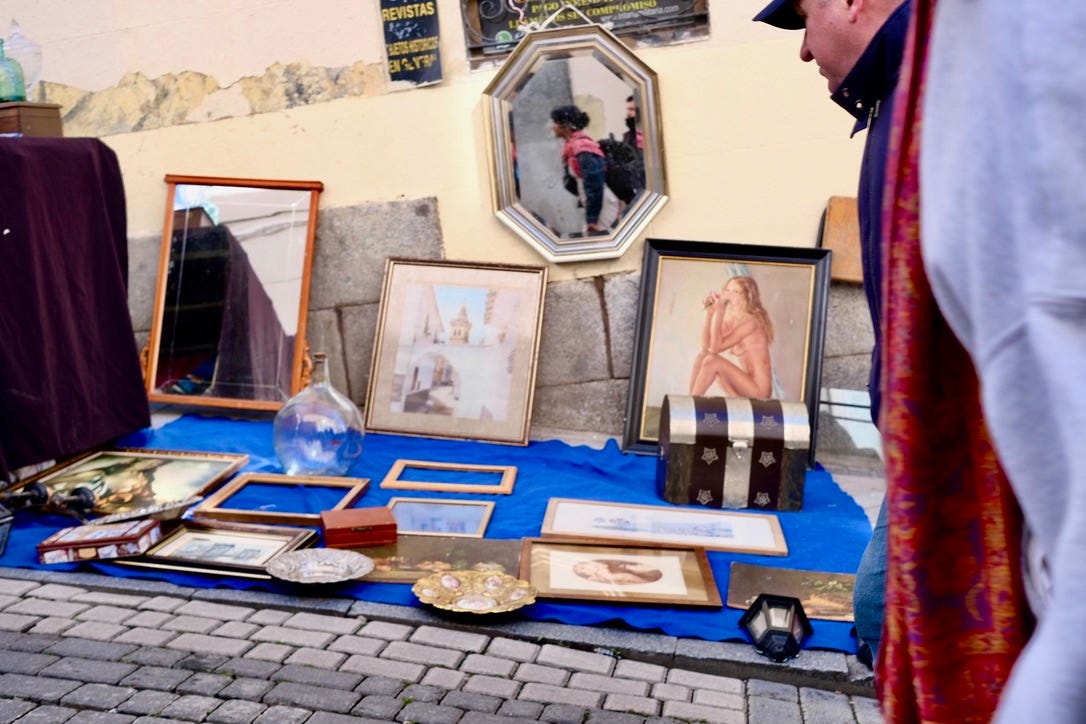
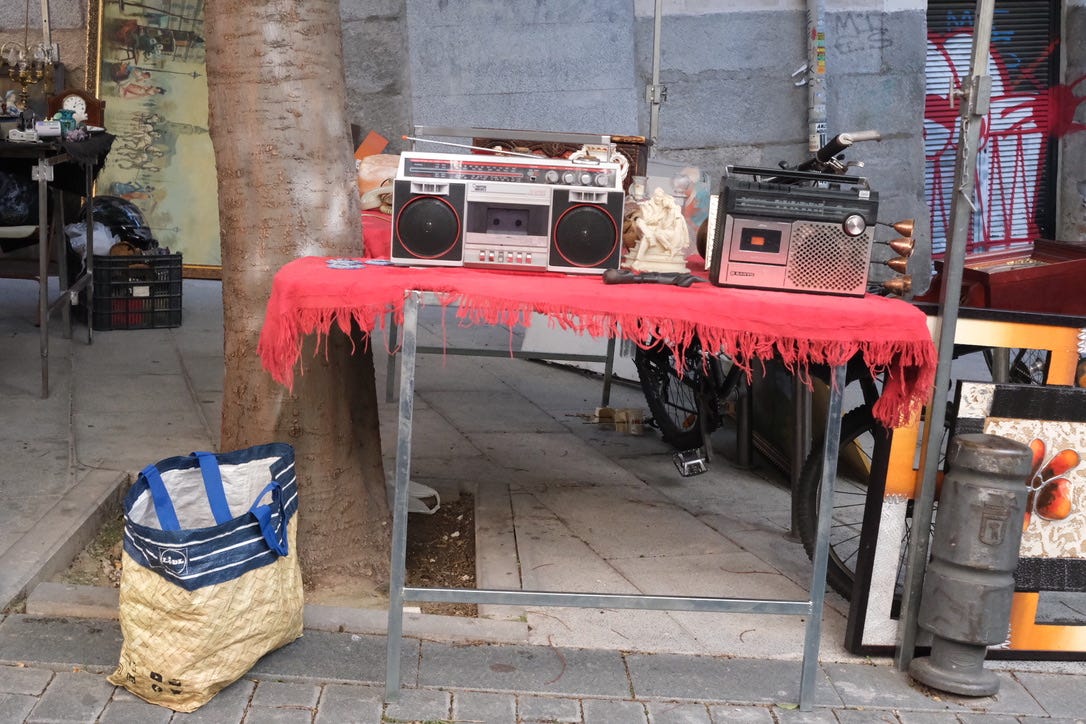
For more interesting items like appropriately—or underpriced—used denim, cameras, electronics, antique hardware, old keys, paintings, prints, antiques, furniture, live succulents, and less mass-produced tchotchkes, you have to go to the sides and to some other squares, like the Plaza de General Vara del Rey, a spot where we almost lived. It has a lot of the furniture and antiques. Bottom of the hill, closer to Puerta de Toledo metro, Plaza del Campillo del Mundo Nuevo, has a crustier vibe with old posters, vinyl, and toys. I think this is where I was tempted to buy a thrashed guitar.
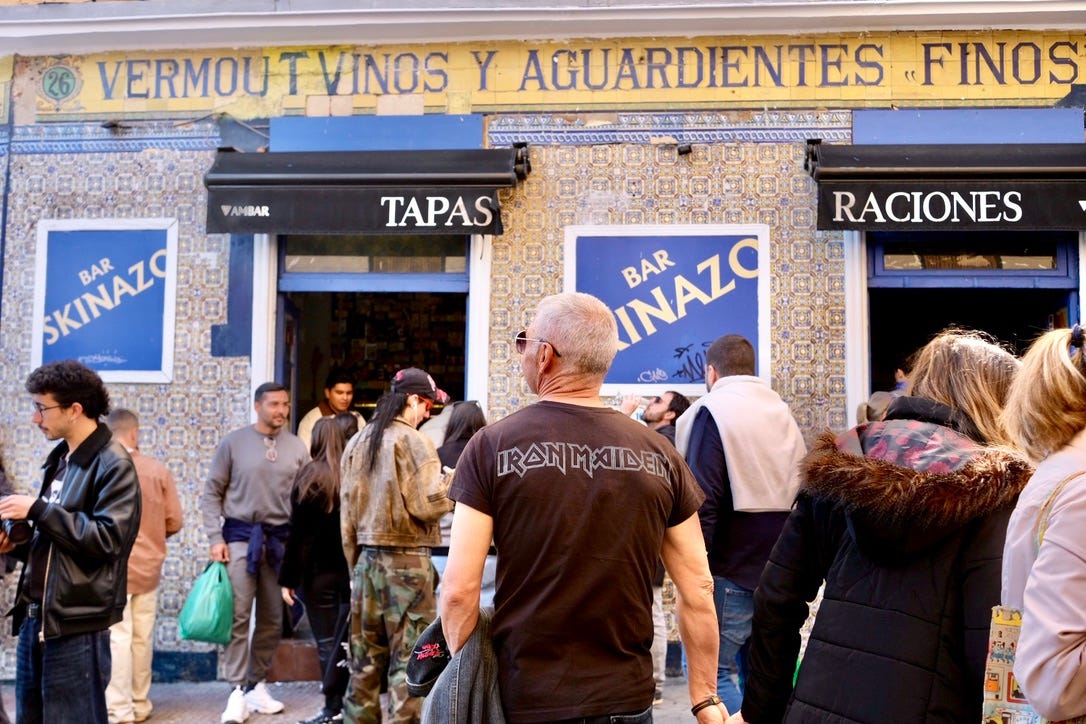
It’s also a brunch scene, a place to meet up with friends and wander together. You’ll probably need the nourishment anyhow if you cross or become entangled in Calle de la Ribera de Curtidores. That’s a major expenditure of energy, so you’ll need to find a bocadillo, a toasted sandwich, a cortado, or a pincho de tortilla, a slice of omelette.
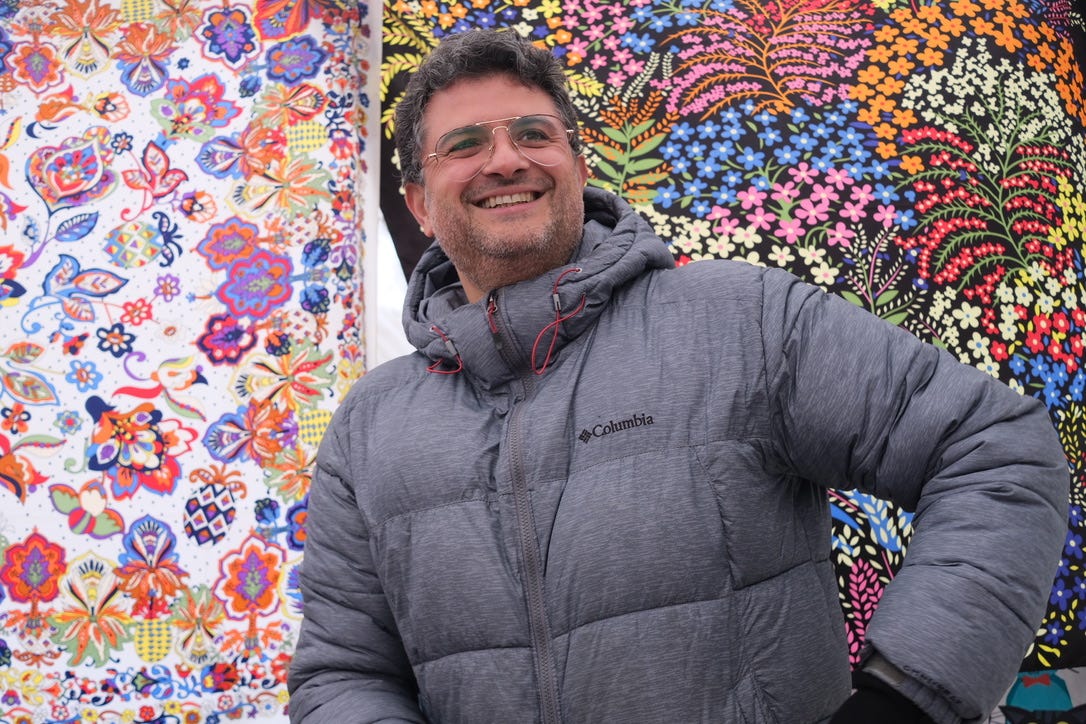
The first weekend we went, I was on a mission to find some kind of art for our bare living room walls. Success. For 5€ I found “silk,” 1.5 meters square. So many choices: wildflowers, a Garden of Earthly Delights, El jardín de las delicias by El Bosco, or the nice botanical print that ended up in our living room. Another trip I saw a lovely distressed Levi’s trucker jacket.
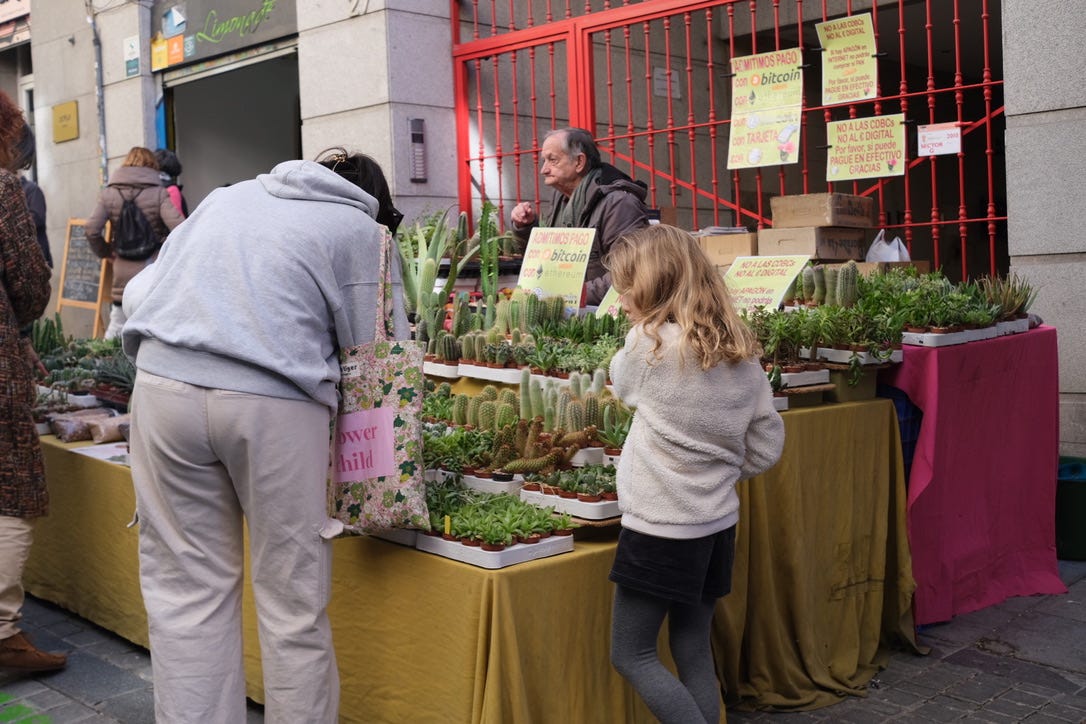
When we went back two weeks later, it was still there and I bought it for 20€. A backpack for Sarina for school. It needed to be navy blue or black to match her school uniform. Another time the sun was in my eyes, so for 5€ I bought a plaid gorra, a driver’s cap, which I later gifted to my nephew Leo. I also got my Borsalino fedora from vintage resale shop on the edge on Calle de Embajadores, just south of the plaza de Cascorro, an official border of el Rastro.
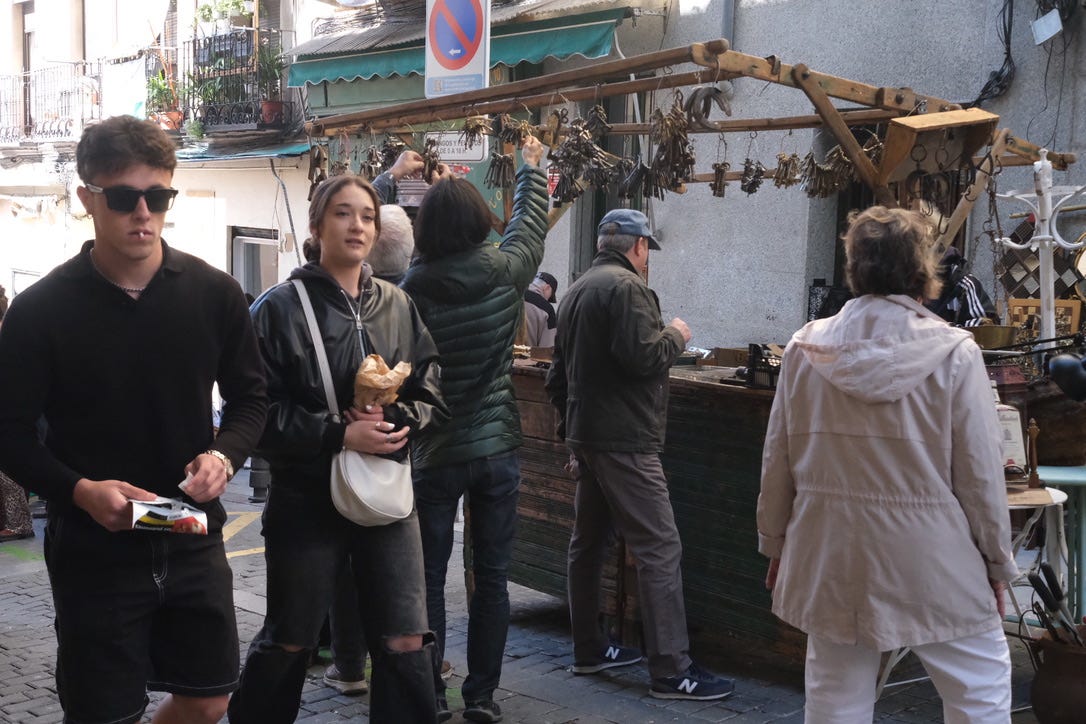
Keychains galore. In our latter days, we felt as if we needed trinkets for our homies back in the EEUU. I still carry my navy, red, and gold striped keychain for our house key, as I did in Madriz.
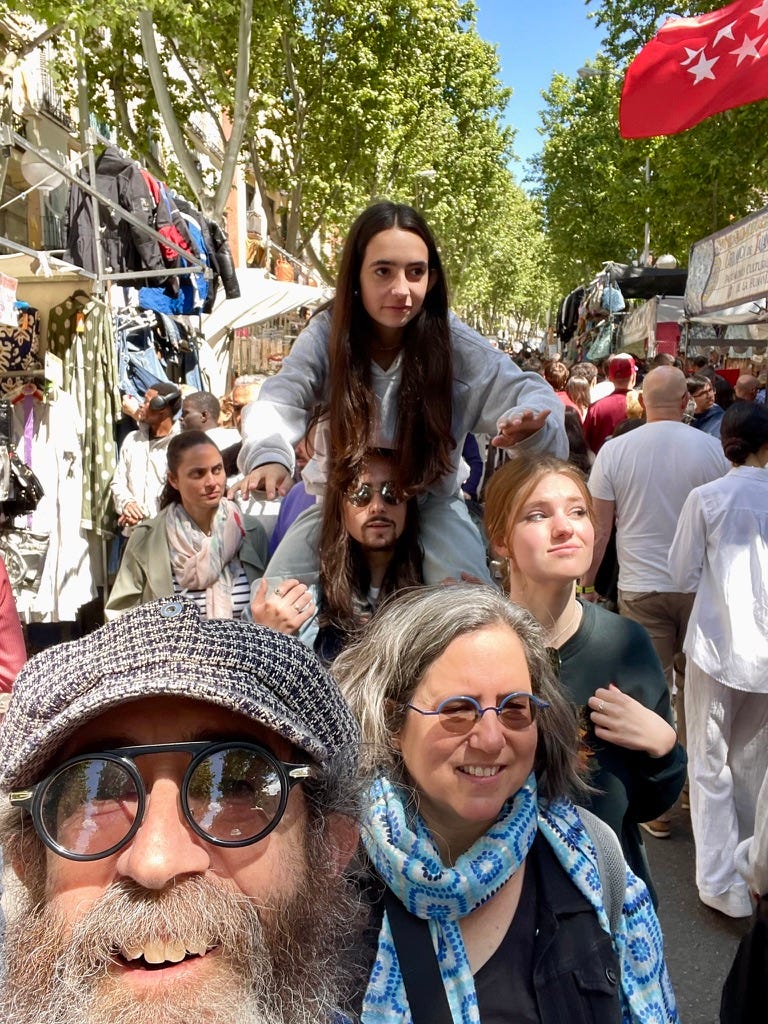
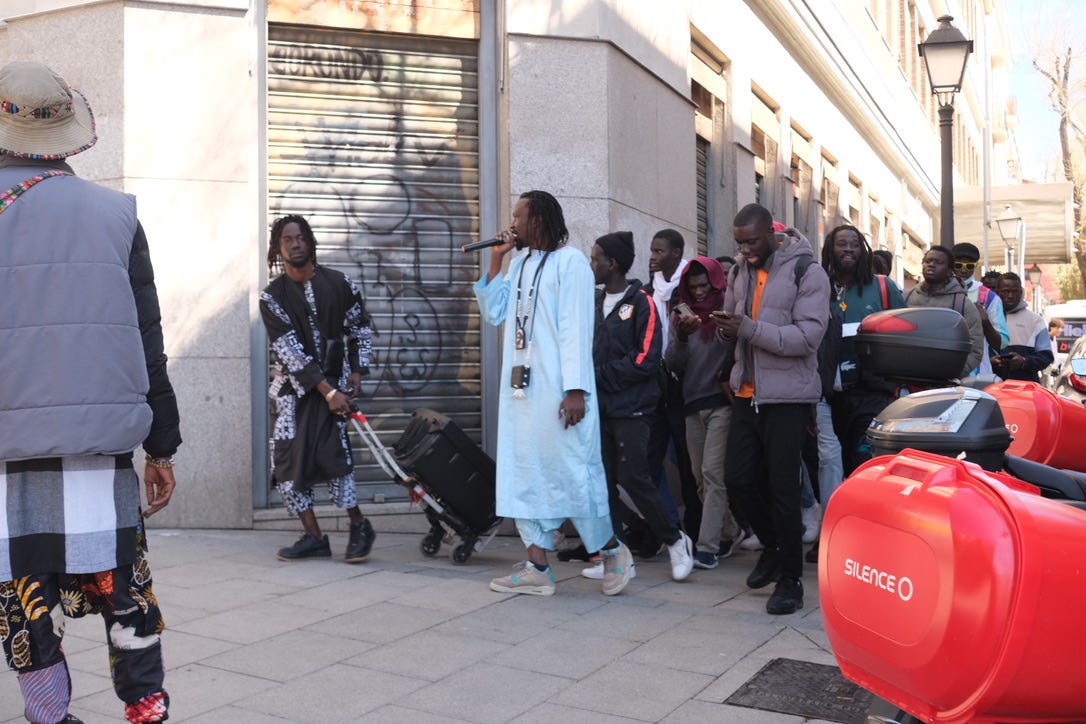
The people-watching is exquisite because it is a blend of communities and peoples: tourists and new madrileños, vendors and store owners and hipsters, families with children, grandparents, and the curious. One Sunday, a man older than me with a big camera asked if he could take my photo.
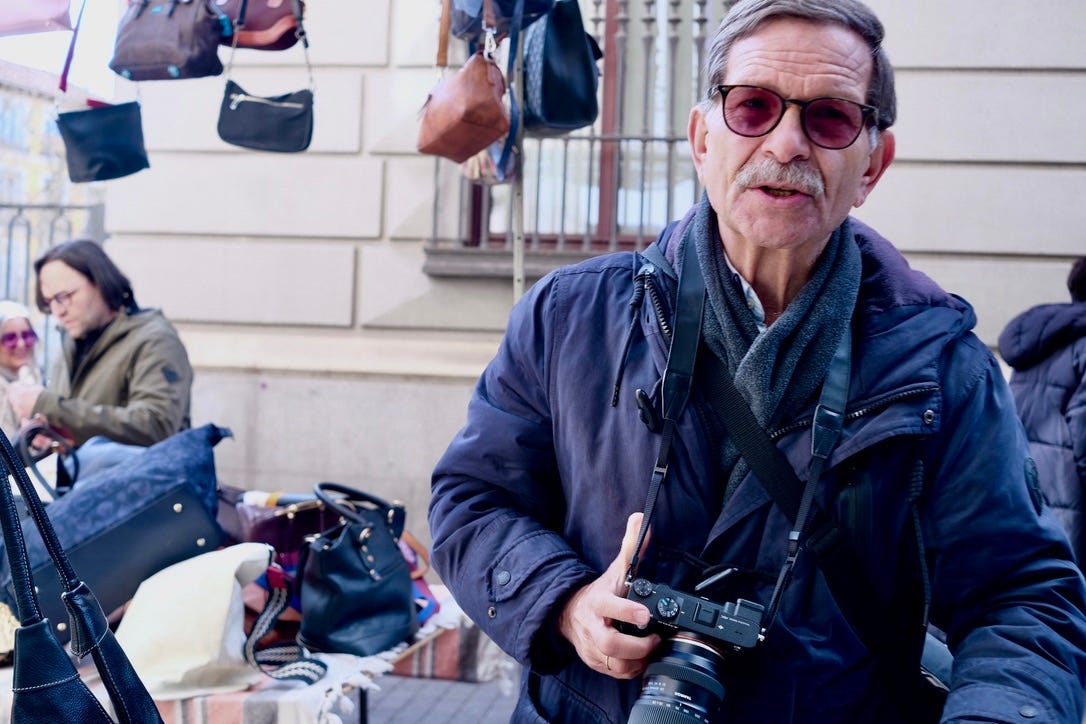
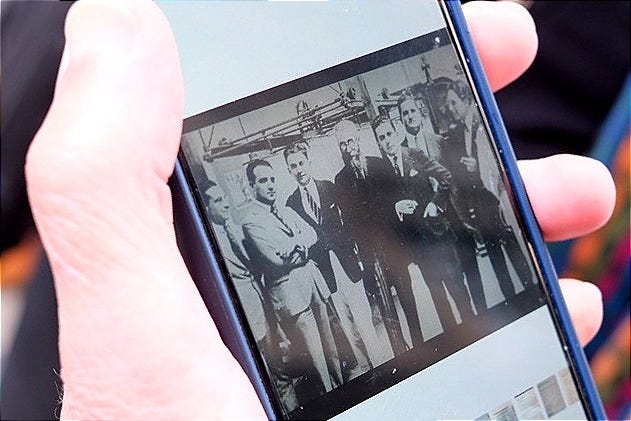
It was a fascinating exchange, partly because I confessed to him: that I was also a photographer; a doppelgänger for Ramón María del Valle-Inclán; descended from Jewish families. Of Valle-Inclán—for whom Ramón shared his first name—he excitedly pulled out his phone and began scrolling for photos. His family was from Cuba, and his grandparents hosted Valle-Inclán—he showed a photo of my doppelgänger with his ancestors.
Of my Jewish ancestry, he expressed admiration, what my people endured and their contributions to culture and society. I can’t take all of the credit for that, but I thanked him for his support.
In researching and remembering for this article, I came across a citation of one of my cherished authors, Hans Magnus Enzensberger (HME). He wrote a lot and for a long time about the power and potential of new media, but in 1987 he wrote Ach Europa!, aka “Europe, Europe: Forays into a Continent” in the 1989 English translation. He echoes an idea that I’ve also heard from Franco, that Spain is not really part of Europe, but more a part of North Africa.
There’s a point to be made about that, since it’s much harder to cross the Pyrenees Mountains (ask Walter Benjamin) than it is to cross the 14km of water between Spain and Morocco at the Straits of Gibraltar. Anyhow, Enzensberger is attributed on the Wikipedia page for El Rastro and in many blogs for saying, “El Rastro is the final border between Europe and Africa.” Which is a nice way to say it’s an eclectic convergence of the curious.
But I couldn’t let Wikipedia and a dozen blogs repeat that imprecise phrase, “final border between Europe and Africa.” I went to the library and picked up the book. Page 231 from the chapter Spanish Shards, 1985: “The Rastro is the souk, the grand bazaar, of the capital. This is where Europe ends.”
For HME to use the words souk and bazaar is to conjure the etymology of Arabic and Persian, respectively, for public market. Yes, okay, Wikipedians, Europe and Africa, if we think of land masses—the Iberian Peninsula and the Maghreb, or Morocco, north-south. But think of civilizations the way the Phoenicians did: by water and the seas. Then Spain is the final border between Europe and the Middle East. Yes, Africa—North Africa—but also West and South Asia. Persia and Arabia, the east, and Iberia, the Algarve, al-garb, the west, in Arabic. The western most point of the Iberian peninsula, from where Columbus launched.
Before we left Madrid, I found an Instagram account, @todorastro, everything Rastro. The creator, photographer Alejandra Seijas, finds the coolest people and does a short interview about where they are from, their style of dress, where they got their pieces. Sometimes it’s more than fashion, sometimes it’s music, sometimes the curious wares, but mostly, just like everything Rastro, it’s más que un mercado, it’s more than a market, it’s a cultural exchange. Y muy de Madriz.